

In the aluminum alloy industry chain, silicon metal (also known as industrial silicon, with a purity of generally more than 98%) is one of the core additives. Its unique chemical and physical properties make it play an irreplaceable role in aluminum alloy production.
Silicon metal (Si) is a semi-metallic element with semiconductor properties, with a melting point of up to 1414°C and a density of 2.33g/cm³. In aluminum alloy production, metallic silicon is introduced in the form of silicon element additives, and changes the crystallization behavior and microstructure of the alloy by forming an Al-Si binary alloy system with aluminum (Al).
Purity Grading and Industry Standards
| Purity Grades | Silicon content(Si≥) | Total impurity content(Fe+Al+Ca≤) | Core type | Application Areas |
|---|---|---|---|---|
| Metallurgical Grade | 98.5%-99.5% | 1.5%-0.5% | 553#,441# | Aluminum alloys, steel deoxidation, organosilicon |
| Electronic Grade | 99.999% (5N) or more | 0.001% or less | 2202#,1101# | Semiconductors, photovoltaic polysilicon |
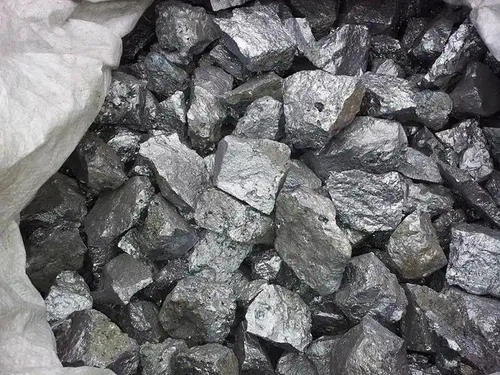
Core application scenarios of silicon metal in aluminum alloy production
1. Performance optimization of cast aluminum alloys (Al-Si alloys)
(1) Improving casting processability
Improving fluidity: In Al-Si casting alloys (such as A356, ADC12, etc.), the silicon content is usually 7%-12%. The addition of silicon can reduce the melting temperature of the alloy, improve the fluidity of the melt, make it easier to fill complex molds, and reduce casting defects (such as cold shut and insufficient pouring).
Reducing the tendency of thermal cracking: Silicon can reduce the thermal expansion coefficient of the alloy (for example, the thermal expansion coefficient of Al-12Si alloy is about 20×10⁻⁶/℃, which is lower than 23×10⁻⁶/℃ of pure aluminum), reduce the shrinkage stress during the cooling process of the casting, and reduce the risk of thermal cracking.
(2) Strengthening mechanical properties
Grain refinement: Silicon as a second phase particle is evenly distributed in the aluminum matrix, which can hinder the growth of grains, form a fine equiaxed crystal structure, and improve the strength and toughness of the alloy. For example, Al-7Si-0.3Mg alloy (a commonly used casting alloy in aerospace) can achieve a tensile strength of more than 270MPa through silicon microalloying.
Improving wear resistance: In aluminum alloys with high silicon content (such as hypereutectic alloys containing 18%-22% silicon), hard and brittle primary silicon particles (hardness of about 1000HV) will precipitate, significantly improving the wear resistance of the alloy. It is often used to manufacture wear-resistant parts such as automobile engine cylinders and pistons.
2. Microalloying of deformed aluminum alloys (processed alloys)
In deformed aluminum alloys (such as 6xxx series aluminum alloys, Al-Mg-Si series), silicon metal is mainly used as a silicon source to form Mg₂Si strengthening phase with magnesium. For example:
6061 alloy (Al-1Mg-0.6Si): Silicon reacts with magnesium to form Mg₂Si particles. Through the aging strengthening process, the yield strength of the alloy reaches 276MPa, which is widely used in building profiles and aviation structural parts.
6082 alloy (Al-1Si-0.8Mg): It has a high silicon content and is suitable for extrusion molding. It is often used to manufacture rail transit car bodies, industrial frames, etc.
3. Customized regulation of special performance aluminum alloys
Low expansion aluminum alloy: By adding a high proportion of silicon metal (such as Al-Si alloys containing 50%-70% silicon), the thermal expansion coefficient can be reduced to below 5×10⁻⁶/℃, which is used in fields with high requirements for thermal stability such as electronic packaging substrates and optical instrument components.
High thermal conductivity aluminum alloy: Although the thermal conductivity of silicon (148W/m・K) is lower than that of aluminum (205W/m・K), the uniform distribution of silicon particles in Al-Si alloy can form a thermal network, improve the overall thermal conductivity of the alloy, and is suitable for 5G base station radiators, CPU heat sinks and other scenarios.
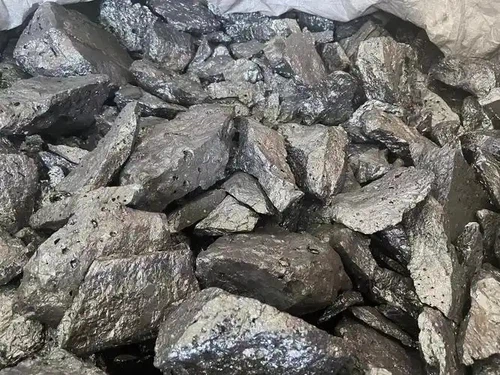
Application trend and industry impact of metal silicon
With the rapid development of new energy, lightweight and other fields, the application of metal silicon in aluminum alloys shows the following trends:
New energy vehicle field: Battery housing, motor end cover and other components use a large number of high silicon aluminum alloys (such as Al-12Si), using its wear resistance and good heat dissipation characteristics to meet the reliability and energy efficiency requirements of new energy vehicles.
Aerospace lightweight: Low-density, high-strength aluminum alloys (such as Al-8Si-3Cu-2Li) developed by metal silicon microalloying can be used to manufacture aircraft skins, wing ribs and other structural parts to reduce the weight of aircraft.
Circular economy promotion: In the recycled aluminum industry, metal silicon can be used as a "silicon supplement" to adjust the silicon content of the recycled materials, maintain the stability of the alloy performance, and conform to the trend of green manufacturing.
As a "performance regulator" for aluminum alloy production, silicon metal gives aluminum alloys a variety of mechanical and physical properties by precisely controlling the silicon content and microstructure, supporting the development of key industries from automobile manufacturing to aerospace. With the advancement of smelting technology (such as low-energy silicon purification process) and the expansion of emerging application scenarios, the value of metal silicon in the field of aluminum alloys will be further highlighted.


