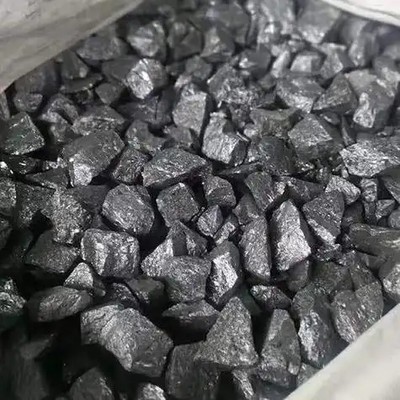
Spring steel is a critical material in automotive, machinery, aerospace, and construction industries, valued for its excellent elastic limit, fatigue resistance, and shape recovery ability. As a core deoxidizer and alloying agent, ferro silicon (FeSi) plays an irreplaceable role in spring steel production-its silicon content directly determines the elastic limit, toughness, and processability of the final product. Unlike other steels where silicon can be adjusted within a broad range, spring steel requires extremely precise control of silicon content: too low, and the elastic limit fails to meet application requirements; too high, and brittleness increases, reducing fatigue life.

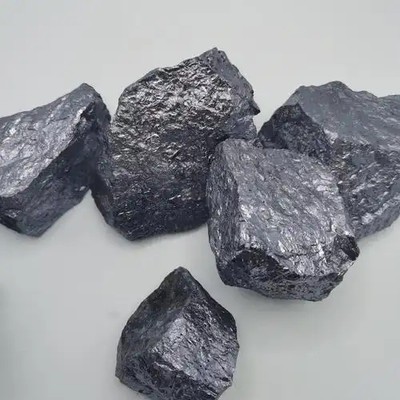
Core Overview
To understand why silicon range control is critical for spring steel's elastic limit, it is first necessary to clarify spring steel's core performance requirements and ferro silicon's dual role (deoxidation + alloying) in its production. Spring steel must withstand repeated stress cycles without permanent deformation, making elastic limit its most critical indicator . Ferro silicon alloy, as the primary silicon source, directly influences this indicator through its chemical composition and addition control.
Dual Role of FerroSilicon in Spring Steel Production
Ferrosilicon alloy serves two critical roles in spring steel smelting, both of which are closely linked to silicon range control and final elastic limit :
Deoxidation: Silicon in fesi reacts with dissolved oxygen in molten steel to form SiO₂, which floats to the slag layer for separation. This reduces oxide inclusions in spring steel-impurities that would weaken the material's structure and lower its elastic limit and fatigue resistance. For spring steel, deep deoxidation is required, which depends on ferro silicon's silicon content and addition amount.
Alloying: Silicon is a strong ferrite solid solution strengthener. When added in the optimal range, it increases the strength and elastic limit of spring steel by hindering dislocation movement in the crystal structure . It also improves the steel's tempering stability, allowing for higher tempering temperatures to eliminate internal stress without reducing hardness-critical for balancing elastic limit and toughness.
The key challenge: Ferro silicon's silicon content must be precisely controlled to balance these two roles. Too little silicon fails to achieve sufficient deoxidation and alloying; too much silicon causes brittleness, reducing toughness and fatigue life-directly compromising the spring's service safety.
Common Spring Steel Grades & Their Standard Silicon Ranges
Different spring steel grades have specific silicon range requirements, determined by their application scenarios and performance targets.
|
Spring Steel Grade |
Standard Silicon Range (%) |
Target Elastic Limit (MPa) |
Recommended Ferro Silicon Grade (FeSi) |
Typical Application |
|---|---|---|---|---|
|
60Si2Mn |
1.50 - 2.00 |
1200 - 1350 |
FeSi 75 (Si 74-76%) |
Automotive suspension springs, industrial machinery springs <superscript:5> |
|
61SiCr7 |
1.20 - 1.60 |
1300 - 1450 |
FeSi 75 (Si 74-76%) |
High-stress springs, tool springs <superscript:1> |
|
55SiMnVB |
1.10 - 1.40 |
1100 - 1250 |
FeSi 70 (Si 69-71%) |
Lightweight automotive springs, small precision springs |
|
50CrVA |
0.15 - 0.35 |
1150 - 1300 |
FeSi 65 (Si 64-66%) |
Aerospace springs, high-temperature resistant springs |
Key Insight: Most high-performance spring steels (e.g., 60Si2Mn, 61SiCr7) require a silicon range of 1.10-2.00%, corresponding to FeSi 70 or FeSi 75. Low-silicon spring steels (e.g., 50CrVA) use FeSi 65 to avoid excessive silicon addition. This aligns with the trend of high-purity ferro silicon (Si≥75%, low impurities) being preferred for high-end spring steel production .

The Relationship Between Silicon Range & Spring Steel's Elastic Limit
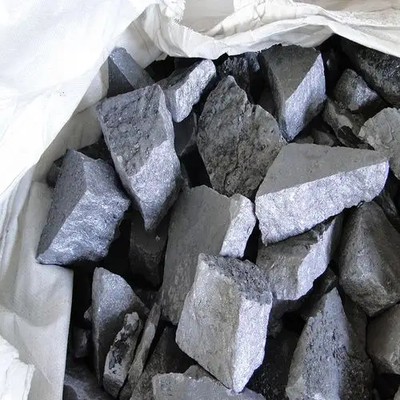
The elastic limit of spring steel is directly determined by the silicon content introduced by fesi alloy-there is a "bell-shaped" relationship between the two: elastic limit increases with silicon content within the optimal range, but decreases sharply when silicon exceeds the upper limit (due to brittleness) or falls below the lower limit (due to insufficient strengthening).
How Silicon Controls Elastic Limit
The impact of silicon (from ferro silicon) on spring steel's elastic limit is rooted in its atomic structure and interaction with the steel matrix, supported by metallurgical thermodynamics:
Solid Solution Strengthening:
Silicon atoms dissolve into the ferrite matrix of spring steel, causing lattice distortion. This distortion hinders the movement of dislocations (atomic defects), making it more difficult for the material to undergo plastic deformation-directly increasing the elastic limit. The strengthening effect is most significant when silicon is in the 1.10-2.00% range.
Tempering Stability Enhancement:
Silicon delays the precipitation and aggregation of carbides during tempering. This allows spring steel to be tempered at higher temperatures (380-420℃) to eliminate internal stress, while maintaining high hardness and elastic limit. Without sufficient silicon, tempering at high temperatures would reduce hardness and elastic limit.
Oxide Inclusion Reduction:
Silicon from ferro silicon performs deep deoxidation, reducing oxide inclusions (e.g., FeO, Al₂O₃) in the steel. These inclusions act as stress concentration points, which would otherwise reduce the elastic limit and cause fatigue failure. However, excessive silicon leads to the formation of brittle silicate inclusions, which have the opposite effect.

Practical Guidelines: Controlling Silicon Range via Ferro Silicon
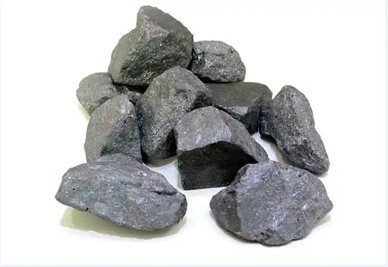
Select the Right Ferro Silicon Grade
- High-Silicon Spring Steels (Si 1.10-2.00%): Use FeSi 75 (Si 74-76%) for optimal alloying and deoxidation. Ensure impurity content meets standards: S≤0.03%, P≤0.03%, Al≤1.5% <superscript:2><superscript:3>.
- Low-Silicon Spring Steels (Si 0.15-0.35%): Use FeSi 65 (Si 64-66%) to avoid excessive silicon addition. This is suitable for grades like 50CrVA, where toughness is prioritized over high elastic limit.
- Avoid Low-Grade Ferro Silicon: Do not use FeSi with Si < 60%, as it increases consumption and reduces silicon recovery rate, leading to inconsistent silicon content.
Optimize Ferro Silicon Addition Method & Amount
1. Feeding Method: Use FeSi cored wire for precise, uniform feeding-this reduces silicon volatilization and improves recovery rate by 5-8% compared to manual or lump addition. For induction furnaces, feed the cored wire into the deep part of the molten steel (1.5-2.0 m) to ensure full reaction.
2. Addition Amount Calculation: Calculate the required ferro silicon addition based on the target silicon content, silicon recovery rate (typically 85-90% for FeSi 75), and steel output. Formula: Addition amount (kg/ton steel) = (Target Si% - Initial Si%) × 10000 / (FeSi Si% × Recovery Rate%).
3. Real-Time Adjustment: Use OES to detect molten steel silicon content in real time, adjusting the ferro silicon addition amount to keep it within the target range. Avoid over-addition, as excess silicon cannot be removed and will reduce toughness.
Optimize Smelting Process to Improve Silicon Recovery Rate
Silicon recovery rate directly affects silicon range consistency. To maintain a recovery rate of 85-90%:
- Control Molten Steel Temperature: Maintain the temperature at 1550-1600℃ during ferro silicon addition. A temperature below 1500℃ reduces reaction efficiency; above 1650℃ increases silicon volatilization.
- Optimize Slag Properties: Control slag alkalinity at 2.3-2.6 and FeO + MnO content ≤ 0.5% to create a reducing environment, reducing silicon oxidation<superscript:5>.
- Implement LF Refining: Use LF ladle refining with foam white slag and vacuum degassing to remove oxygen and impurities, improving silicon recovery rate and content consistency .
Quality Control & Testing
- Molten Steel Testing: Use OES to detect silicon content every 5-10 minutes during smelting, ensuring it stays within the target range. For critical spring steel grades, conduct duplicate tests to avoid errors.
- Finished Product Testing: Test the elastic limit and toughness of finished spring steel using a universal testing machine. If the elastic limit is too low, increase ferro silicon addition; if toughness is insufficient, reduce silicon content by adjusting ferro silicon addition.
- Ferro Silicon Quality Inspection: Inspect the silicon content and impurity levels of incoming ferro silicon to ensure it meets the required grade-this is the foundation of silicon range control.