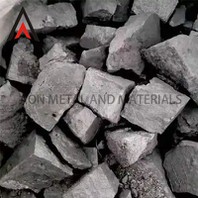
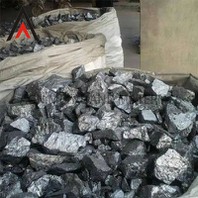
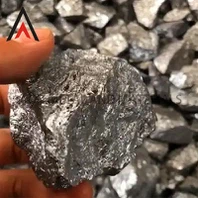
Silicon metal, also known as industrial silicon or crystalline silicon, is an important industrial raw material and occupies a key position in modern industry. It is mainly smelted in a submerged arc furnace with silica and carbonaceous reducing agent. The silicon content is usually around 98%, and some high-quality products can contain up to 99.99% silicon, accompanied by impurities such as iron, aluminum, and calcium. Because it is widely used in many fields, silicon metal is divided into a variety of specifications according to different uses.


Common specifications of silicon metal
In the industry, silicon metal is generally classified according to the content of the three main impurities of iron, aluminum, and calcium. Common specifications include 553, 441, 411, 421, 3303, 3305, 2202, 2502, 1501, 1101, etc. Each grade has a specific meaning. For example, in 553, the first digit 5 means that the iron content does not exceed 0.5%, the second digit 5 means that the aluminum content does not exceed 0.5%, and the third digit 3 means that the calcium content does not exceed 0.3%. Similarly, in 441, the iron, aluminum, and calcium contents do not exceed 0.4%, 0.4%, and 0.1%, respectively. The specific specifications are shown in the following table:
| Brand | Si | Fe | Al | Ca |
| 1101 |
≥99.70 |
≤0.1 |
≤0.1 |
≤0.01 |
| 1501 |
≥99.69 |
≤0.15 |
≤0.15 |
≤0.01 |
| 2202 |
≥99.58 |
≤0.2 |
≤0.2 |
≤0.02 |
| 2502 |
≥99.48 |
≤0.25 |
≤0.25 |
≤0.02 |
| 3303 |
≥99.37 |
≤0.3 |
≤0.3 |
≤0.03 |
| 3305 |
≥99.25 |
≤0.3 |
≤0.3 |
≤0.05 |
| 411 |
≥99.40 |
≤0.4 |
≤0.1 |
≤0.1 |
| 421 |
≥99.30 |
≤0.4 |
≤0.2 |
≤0.1 |
| 441 |
≥99.10 |
≤0.4 |
≤0.4 |
≤0.1 |
| 551 |
≥98.90 |
≤0.5 |
≤0.5 |
≤0.1 |
| 553 |
≥98.70 |
≤0.5 |
≤0.5 |
≤0.3 |
The difference between different specifications in use and effect
Aluminum alloy manufacturing field
553 and other medium and low purity specifications: In aluminum alloy production, 553 metal silicon is widely used. Due to its relatively high content of impurities such as iron, aluminum, and calcium, it can effectively adjust the composition of aluminum alloys and enhance the casting properties of alloys. The appropriate addition of 553 silicon can make aluminum alloys more fluid in liquid state, facilitate the casting of parts with complex shapes, and improve the dimensional accuracy and surface quality of castings. In the casting of automotive aluminum alloy wheels, the addition of silicon 553 can optimize the crystallization process of the alloy, reduce defects such as pores and shrinkage, improve the strength and toughness of the wheel, and meet the mechanical performance requirements during the driving process of the car.
High-purity specifications such as 441: For high-end aluminum alloy products, such as aluminum alloys for aerospace, 441 and higher purity metal silicon are more popular. This type of metal silicon has low impurity content and high silicon purity, which can bring better comprehensive performance to aluminum alloys. The addition of high-purity silicon can significantly improve the strength, hardness and corrosion resistance of aluminum alloys, meeting the use requirements of aerospace components in extreme environments. In the manufacture of aircraft structural parts, aluminum alloys prepared with silicon 441 can reduce the weight of components while ensuring structural strength, and improve the fuel efficiency and flight performance of aircraft.
Application in semiconductor industry
Ultra-high purity specifications (such as 1101, etc.): The semiconductor industry has extremely strict requirements on the purity of metal silicon. 1101 metal silicon contains more than 99.70% silicon, and the content of impurities such as iron, aluminum, and calcium is extremely low. It is an ideal raw material for manufacturing semiconductor devices. Ultra-high purity silicon can ensure that semiconductor materials have good electrical properties, such as low resistivity and high electron mobility. Single crystal silicon made from silicon 1101 through a series of complex purification processes is the core material of integrated circuit chips. Its atomic arrangement is highly ordered and there are almost no lattice defects, which enables the chip to achieve high-speed and low-power operation. It is widely used in electronic products such as computer processors and mobile phone chips.
Other specifications are difficult to apply: Conventional silicon metal specifications such as 553 and 441, due to their relatively high impurity content, will seriously affect the electrical properties of semiconductor materials, resulting in reduced electron mobility and leakage problems. It cannot meet the high-precision requirements of the semiconductor industry and is basically not used in this field.
Use in the chemical industry
3303 and other specifications are used for organosilicon synthesis: In the chemical industry, 3303 metal silicon is often used as an important raw material for the production of organosilicon. There are many types of organosilicon products, such as silicone rubber, silicone resin, silicone oil, etc., which have excellent high and low temperature resistance, weather resistance, electrical insulation and other properties. The silicon element in metal silicon 3303 is converted into the silicon-oxygen bond structure in the organosilicon compound through a series of chemical reactions, which determines the basic performance of the product. In the production of silicone rubber, the silicone rubber generated by the reaction of silicon metal 3303 has good elasticity and high temperature resistance, and can be used to manufacture medical supplies, sealing gaskets, wire and cable insulation layers and other products.
Different specifications have different effects on the performance of chemical products: If low-purity silicon metal is used, impurities may participate in chemical reactions and affect the molecular structure and performance stability of organosilicon products. For example, impurities such as iron and aluminum may cause uneven cross-linking of silicone rubber during the vulcanization process, reducing the strength and elasticity of the rubber; while higher-purity silicon metal can improve product performance, but the cost also increases accordingly. Therefore, chemical companies need to reasonably select the specifications of metal silicon according to product positioning and performance requirements.


Factors affecting specification selection
In actual production, it is very important to select the appropriate specifications of silicon metal, and multiple factors need to be considered. The first is the quality standard of the target product. If high-end and precision products such as semiconductor chips and aerospace components are produced, high-purity and low-impurity metal silicon specifications must be selected; on the contrary, for general aluminum alloy castings and ordinary silicone products, medium and low purity specifications are sufficient to meet the needs. Secondly, the cost factor cannot be ignored. High-purity metal silicon is relatively expensive due to its complex production process and high raw material requirements. Enterprises need to weigh their choices based on their own cost budgets while ensuring product quality. In addition, the adaptability of production equipment and processes will also affect the selection of specifications. Some equipment and processes may be more suitable for processing metal silicon of specific specifications.
Different specifications of silicon metal, with their unique properties, accurately adapt to the diversified needs of multiple industries such as aluminum alloy manufacturing, semiconductors, and chemicals, and play an irreplaceable role in promoting the development of various industries. Understanding these specification differences and their corresponding uses and effects can help companies make more reasonable purchasing and production decisions.