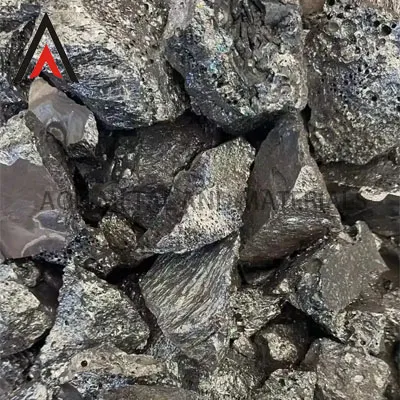
Silicon metal is a fundamental industrial raw material widely used in steelmaking, alloy smelting, and non-ferrous metallurgy. It serves as a critical deoxidizer, alloying agent, and nucleating additive to adjust metal strength, fluidity, and structural stability. With multiple grades and impurity specifications available, improper selection will lead to unstable alloy performance, increased defective rates, and unnecessary production costs.


Understand Core Metallurgical Functions of Silicon Metal
Before grade selection, it is essential to clarify the core roles of silicon metal in metallurgical production, which determines your quality and parameter requirements:
Deep Deoxidation: Eliminates dissolved oxygen in molten steel and molten alloy, reduces oxide inclusions, and improves metal compactness and finish.
Alloy Strengthening: Forms solid solution structures with aluminum, iron, and other base metals to enhance tensile strength, hardness, and wear resistance.
Inoculation & Grain Refinement: Promotes uniform crystal precipitation in cast alloys, effectively reducing casting defects such as porosity and shrinkage cavities.
Key Selection Criteria for Metallurgical-Grade Silicon Metal
Professional metallurgical factories prioritize three core indicators: purity, harmful impurities, and physical particle status. These standards comply with global metallurgical specifications and ensure stable batch-to-batch consistency.
Silicon Purity Matching
Silicon purity directly determines alloying and deoxidation efficiency. Different metallurgical applications require targeted purity grades:
- 97%–98.5% Industrial Grade: Ideal for ordinary steelmaking, general cast iron, and low-standard alloy smelting, focusing on cost-effective deoxidation.
- 98.7%+ High Purity (553/441/3303): Suitable for aluminum alloys, precision low-alloy steel, and high-end casting production, requiring stable mechanical performance.
Strict Impurity Control (Fe, Al, Ca)
The content of iron, aluminum, and calcium is the core difference between silicon metal grades and the key to avoiding metallurgical defects:
- Fe & Al impurities: Excess iron and aluminum cause hard inclusions, reducing alloy toughness and surface finish.
- Ca impurity: High calcium content leads to unstable molten metal fluidity and increased brittleness.
For most standard metallurgical applications, Silicon Metal 553 (Fe≤0.5%, Al≤0.5%, Ca≤0.3%) is the most versatile and cost-effective option, while high-precision production requires Silicon Metal 441 or Silicon Metal 3303 ultra-low impurity grades.
Size Selection
Matching size improves melting efficiency and avoids component deviation:
- 10–50mm: For large furnace steelmaking and bulk deoxidation, ensuring long-lasting and stable reaction.
- 3–15mm: For medium and small furnaces, alloy fine-tuning, and casting inoculation for uniform mixing.


Grade Matching by Metallurgical Application Scenarios
Select silicon metal based on your production type to balance quality and cost:
- Ordinary Steelmaking & Cast Iron: Choose standard 553 grade silicon metal. It provides sufficient deoxidation effect and controls production costs for mass production.
- Aluminum Alloy Production: Prioritize high-purity Si553/Si441 grades with low impurities to ensure alloy ductility and surface quality.
- High-Precision Alloy & Aerospace Materials: Adopt Silicon3303 ultra-low impurity silicon metal to eliminate trace element interference.
Selecting the right silicon metal for metallurgical applications relies on three core factors: targeted purity grade, strict impurity control, and reasonable size matching. For most conventional steelmaking, casting, and aluminum alloy production, Silicon Metal 553 remains the best balance of stable performance and cost efficiency. By selecting grades according to specific application scenarios and following standardized storage and usage rules, manufacturers can effectively reduce defects, stabilize product quality, and optimize overall production benefits.