

Products
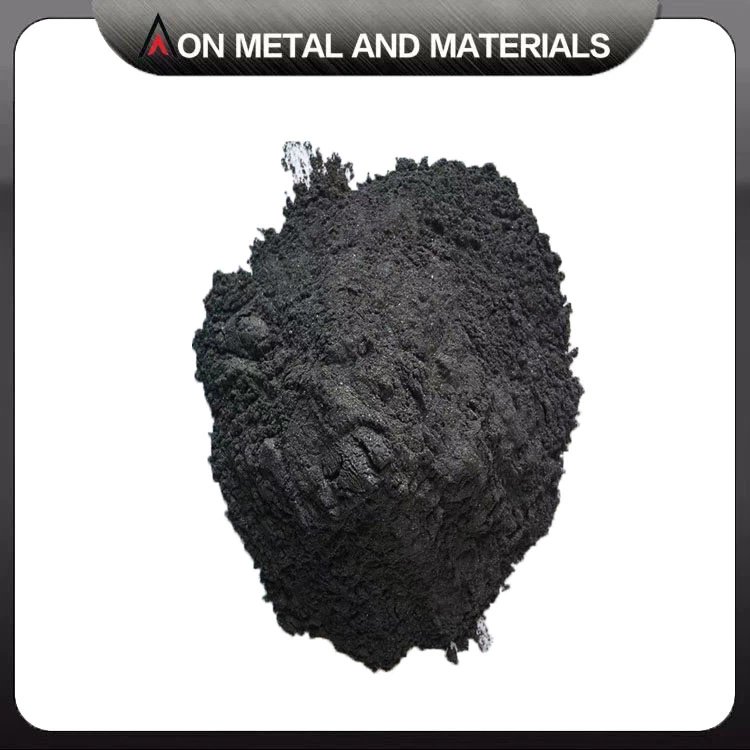
Silicon Metal Powder 98 325mesh
-------------------------------------------------------------------------------------------
Shape: Lump Powder Particles
-------------------------------------------------------------------------------------------
Chemical Composition:Si Fe Al Ca P
-------------------------------------------------------------------------------------------
Size:0~1mm 1~3mm 10mm~50mm 10~60mm 10~100mm .etc
-------------------------------------------------------------------------------------------
Package: Ton bag or customized according to customer requirements
Send Inquiry
Product Introduction
325-mesh (approximately 45 micrometers) silicon metal powder is finer than 200-mesh. This fineness offers two main advantages:
Fast reaction: When used as a raw material for organosilicon, it reacts more fully with chloromethane in a fluidized bed, resulting in higher production efficiency.
Good binding: When used in refractory materials, the fine powder fills the gaps in the aggregate, resulting in a denser and stronger product.
Our 98% grade has a consistently high silicon content (above 98%) and well-controlled iron, aluminum, and calcium impurities, making it a commonly used raw material for organosilicon monomers, refractory binders, and ceramic products.
For organosilicon production: Using 325-mesh powder results in a fast reaction rate and high conversion rate in a fluidized bed. Too coarse a powder leads to incomplete reaction; too fine a powder is easily carried away by the airflow, resulting in waste.
For refractory materials: Using 325-mesh powder as a binder fills the gaps between large particles (e.g., 3-5mm), resulting in denser bricks with fewer pores and higher strength.
For powder metallurgy: Some customers use 325-mesh silicon powder as an additive, requiring fine powder that can be evenly distributed in the matrix.

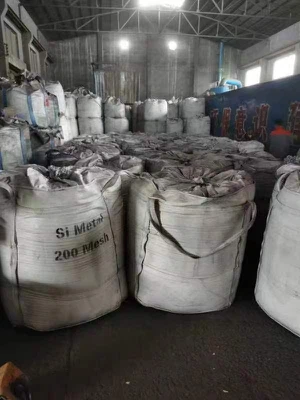
chemical composition
The 325-mesh silicon metal powder we supply is mainly divided into the following purity grades. The 98% grade is the most commonly used 325-mesh powder and offers excellent value for money.
| Grade | Si (%) ≥ | Fe (%) ≤ | Al (%) ≤ | Ca (%) ≤ | Typical Applications |
|---|---|---|---|---|---|
| 97 | 97.0 | 1.5 | 0.5 | 0.3 | Refractory materials, steelmaking deoxidation |
| 98 | 98.0 | 0.6 | 0.5 | 0.3 | Organosilicon raw materials, refractory binders |
| 553 | 98.5 | 0.5 | 0.5 | 0.3 | Aluminum alloys, organosilicon |
| 441 | 99.0 | 0.4 | 0.4 | 0.1 | High-end organosilicon, special alloys |
(We also have other higher purity grades, such as silicon metal 3303 and silicon metal 2202, but if you are buying the 98% grade, the one above is the most suitable.)
Uses of 98 Silicon Metal Powder 325 Mesh
① Organosilicon Chemical Industry
200 mesh silicon powder is the basic raw material for silicone oil, silicone rubber and silicone resin. Its moderate particle size maintains stable reaction speed. Low calcium content protects catalysts from deactivation, ensuring continuous production of methyl chlorosilane and other intermediates.
② Metallurgical Casting Industry
Used as deoxidizer and alloy additive for carbon steel and low-alloy steel. It improves steel hardenability and mechanical properties. When applied to cast iron, it refines grains and reduces shrinkage defects, raising casting yield by over 10%.
③ Refractory & High-temperature Materials
Added to refractory bricks and kiln linings. It enhances high-temperature resistance, wear and oxidation resistance, extending the service life of industrial kilns by 2–3 times.
④ Electronic & Photovoltaic Industry
Further processed into monocrystalline silicon and silicon wafers for integrated circuits and electronic components. Also used for primary purification of polysilicon for solar cells.
⑤ Special Industrial Fields
Suitable for pyrotechnic materials and special chemical preparations, relying on its stable calorific value and chemical properties.
FAQ
Q1: What is the size of 200 mesh silicon powder?
A: 200 mesh is equivalent to about 0.075mm. It has large specific surface area and is widely used in organosilicon and metallurgical industries.
Q2: What is the difference between 200 mesh and 325 mesh silicon powder?
A: 325 mesh is finer with faster reaction speed but higher dust. 200 mesh has better flowability and is the mainstream choice for most conventional production.
Q3: What are the key safety notes for storage and use?
A: Keep dry and away from open flames, oxidants and corrosive substances. Wear protective equipment during operation. Never use water to put out silicon powder fire.
Q4: Do you provide samples and what is the delivery time?
A: Free 1-5kg test samples are available. Standard in-stock goods: 7–15 working days; customized products: 20–30 working days.
Hot Tags: silicon metal powder 98 325mesh, China silicon metal powder 98 325mesh manufacturers, suppliers, factory, Industrial Silicon, Metal Silicon, Metal Silicon 3303, Metal Silicon 441, Metal Silicon 553, Metal Silicon 97
Previous:
Silicon Metal 553 For Aluminum Alloys
Next:
Silicon Metal 441 553
Send Inquiry


