

Calcium silicon, calcium barium silicon , and silicon aluminum barium calcium are similar in that they all contain silicon and calcium, which are important bases for them to play the role of deoxidation and desulfurization. They are all commonly used additives in the metallurgical industry. In the production process of steelmaking and cast iron, they are mainly used for deoxidation and desulfurization, which plays a role in improving metal quality and metal properties. They are usually in block or granular form, with a silver-gray metallic luster on the surface, and are similar in appearance.
| Product |
Calcium Silicon
|
Calcium Barium Silicon
|
Silicon Aluminum Barium Calcium
|
| Photo |
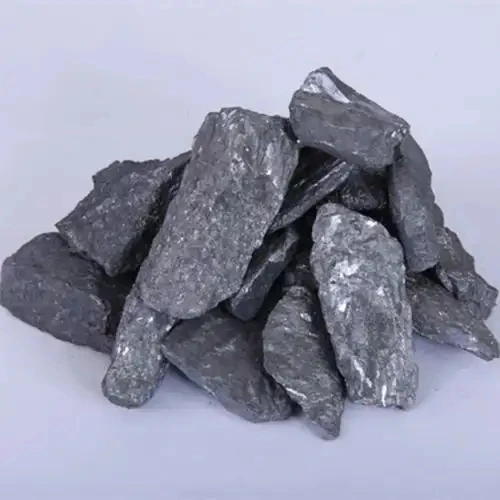 |
 |
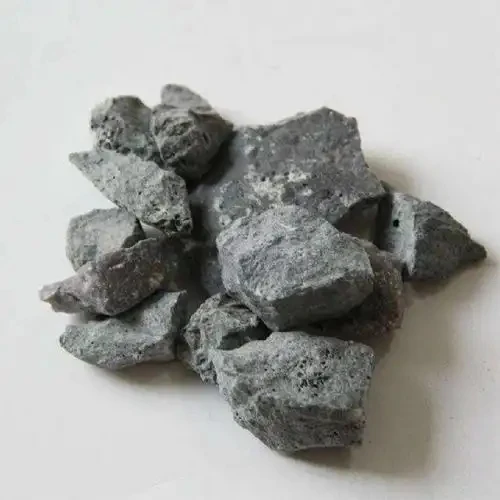 |
| Chemical composition | The main components are silicon and calcium, generally the silicon content is about 55%-65%, and the calcium content is about 24%-31%. | In addition to silicon and calcium, it also contains barium, usually the silicon content is about 68%-72%, the calcium content is about 1.3%, and the barium content is 2%-7%. | Contains four elements: silicon, aluminum, barium, and calcium. The general composition ratio is Si>30%, Ca>6%, Ba>9%, and Al>8%. |
| Effects | It has strong deoxidation ability and can effectively reduce the oxygen content in steel. The formed inclusions such as silicon oxide and calcium can be partially floated and removed, and it can also improve the fluidity and toughness of steel to a certain extent. | Compared with silicon-calcium, due to the presence of barium, it can more effectively reduce the vapor pressure of calcium, increase the solubility of calcium in molten steel, and improve the utilization rate of calcium, thereby enhancing the deoxidation and desulfurization effects. | It has stronger deoxidation and desulfurization ability, can reduce the oxygen content in steel to a lower level, and the complex inclusions containing calcium, barium, aluminum, etc. are easier to float from the molten steel, which has a better purification effect on the molten steel, and can also refine the ferrite grains, significantly improving the impact toughness and processing performance of the steel. |
| Application range | widely used in deoxidation and desulfurization of ordinary steel and low alloy steel, and can also be used as an inoculant in cast iron. | more used in the production of high-quality steel and special steel, used to replace some silicon calcium alloys, and can better meet the occasions with high requirements for steel quality. | suitable for various forms of steelmaking, especially in converter steelmaking and electric furnace smelting of high-quality alloy steel and carbon cast steel. It is also a good inoculant and additive for ductile iron in cast iron production. |


