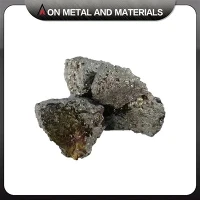
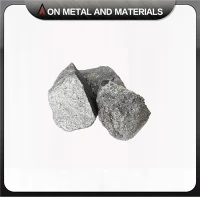
As a supplier of CaSi cored wire, I've witnessed firsthand the significant role this product plays in the steel - making industry. In this blog, I'll delve into the reaction mechanism between CaSi cored wire and molten steel, exploring the science behind it and its implications for steel quality.
1. Introduction to CaSi Cored Wire
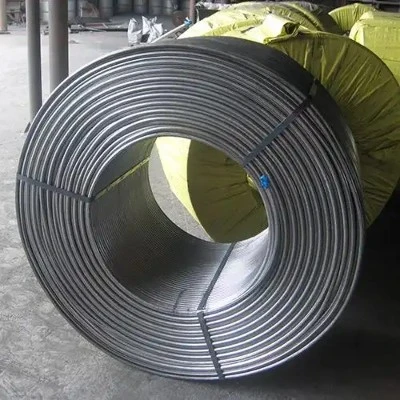
CaSi cored wire, also known as Calcium Silicon Alloy Cored Wire, is a composite product consisting of a calcium - silicon alloy core wrapped in a thin steel sheath. The Calcium Silicon Alloy Wire within the cored wire is a key component that imparts specific properties to the molten steel when introduced.
2. Physical and Chemical Properties of CaSi Alloy
The calcium - silicon alloy used in the cored wire typically contains a certain proportion of calcium and silicon. Calcium is a highly reactive element, while silicon is a well - known deoxidizer and desulfurizer in steel - making. The combination of these two elements in the alloy provides unique chemical reactivity in the molten steel environment.
3. Reaction Mechanism in Molten Steel
3.1 Deoxidation
When the CaSi cored wire is fed into the molten steel, the first significant reaction is deoxidation. Oxygen is a common impurity in molten steel, which can lead to the formation of oxides and reduce the quality of the steel. Silicon in the CaSi alloy reacts with oxygen in the molten steel according to the following reaction:
[Si + 2[O]=\mathrm{SiO}{2}]
The formed (\mathrm{SiO}{2}) can then react with calcium in the alloy. Calcium has a strong affinity for oxygen and can further reduce the oxygen content in the steel. The reaction is as follows:
[2Ca + \mathrm{SiO}_{2}=2CaO+Si]
This series of reactions effectively reduces the oxygen content in the molten steel, improving its purity.

3.2 Desulfurization
Sulfur is another harmful impurity in steel, which can cause hot - shortness and reduce the ductility of the steel. Calcium in the CaSi cored wire can react with sulfur in the molten steel. The reaction is:
[Ca + [S]=\mathrm{CaS}]
(\mathrm{CaS}) is a stable compound that can float to the surface of the molten steel as slag, thereby removing sulfur from the steel.
3.3 Inclusion Modification
In addition to deoxidation and desulfurization, the CaSi cored wire also plays a crucial role in inclusion modification. Non - metallic inclusions in steel, such as alumina ((\mathrm{Al}{2}\mathrm{O}{3})), can have a negative impact on the mechanical properties of the steel. Calcium in the CaSi alloy can react with these inclusions, modifying their shape, size, and composition. For example, calcium can react with alumina to form calcium aluminates, which are more spherical and less harmful to the steel's properties.
4. Factors Affecting the Reaction
Several factors can influence the reaction mechanism between CaSi cored wire and molten steel:
4.1 Temperature
The temperature of the molten steel affects the reaction rate. Higher temperatures generally increase the reaction rate, as the kinetic energy of the reactant molecules is higher. However, extremely high temperatures may also cause the evaporation of calcium, reducing its effectiveness in the reaction.
4.2 Wire Feeding Speed
The speed at which the CaSi cored wire is fed into the molten steel is also crucial. A too - fast feeding speed may not allow sufficient time for the alloy to react completely, while a too - slow speed may result in the premature melting of the steel sheath and the loss of the alloy before it reaches the desired depth in the molten steel.
4.3 Composition of the Molten Steel
The initial composition of the molten steel, including the content of oxygen, sulfur, and other elements, can affect the reaction mechanism. For example, if the sulfur content is very high, more calcium will be consumed in the desulfurization reaction.
5. Benefits of Using CaSi Cored Wire in Steel - making
The use of CaSi Cored Wire in steel - making offers several benefits:
5.1 Improved Steel Quality
By reducing oxygen and sulfur content and modifying inclusions, the use of CaSi cored wire can significantly improve the purity and mechanical properties of the steel. This leads to better - quality steel products with higher strength, ductility, and corrosion resistance.
5.2 Cost - effectiveness
Compared to other methods of deoxidation and desulfurization, the use of CaSi cored wire is relatively cost - effective. It can achieve the desired results with a relatively small amount of alloy, reducing the overall cost of steel production.
5.3 Process Control
The use of CaSi cored wire allows for better control of the steel - making process. The wire can be precisely fed into the molten steel, ensuring a more uniform reaction and better control of the steel's composition.
6. Conclusion and Call to Action
In conclusion, the reaction mechanism between CaSi cored wire and molten steel is a complex but well - understood process. Through deoxidation, desulfurization, and inclusion modification, CaSi cored wire plays a vital role in improving the quality of steel.
If you are in the steel - making industry and are looking for a reliable supplier of CaSi cored wire, we are here to help. Our high - quality CaSi cored wire can meet your specific requirements and improve the efficiency and quality of your steel - making process. Contact us to discuss your procurement needs and find the best solution for your business.
References
- Smith, J. (2018). Steel - making processes and alloying elements. Metallurgical Press.
- Johnson, R. (2020). The role of calcium - silicon alloys in steel desulfurization. Journal of Metallurgy, 45(2), 123 - 135.