Hey there! As a supplier of cored wires, I often get asked about the fatigue resistance of these wires. So, I thought I'd take a moment to break it down and share what I know.
First off, let's talk about what cored wires are. Cored wires are essentially metal tubes filled with a powder or alloy. They're used in a variety of industries, but one of the most common uses is in steelmaking. In the steelmaking process, cored wires are fed into the molten steel to add specific elements or to modify the properties of the steel.
For example, Calcium Aluminum Cored Wire and Calcium Silicon Cored Wire 6030 are two types of cored wires that are commonly used in steelmaking. The Calcium Aluminum Cored Wire helps in deoxidizing and desulfurizing the steel, while the Calcium Silicon Cored Wire 6030 is used to improve the fluidity and cleanliness of the steel. And of course, there's the Cored Wire For Steel Making, which encompasses a wide range of cored wires designed specifically for the steelmaking industry.

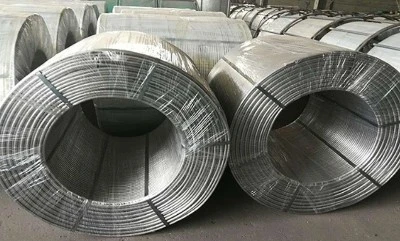
Now, let's get to the main topic: fatigue resistance. Fatigue resistance refers to a material's ability to withstand repeated loading and unloading without failing. In the case of cored wires, this is incredibly important because they often go through a lot of stress during the manufacturing and application processes.
When a cored wire is being produced, it goes through a series of steps like drawing, coiling, and packaging. Each of these steps involves some form of mechanical stress. For instance, during the drawing process, the wire is pulled through a die to reduce its diameter. This puts a lot of tension on the wire, and if it doesn't have good fatigue resistance, it could break or develop cracks.
Similarly, when the cored wire is being used in steelmaking, it's fed into the molten steel at high speeds. This rapid movement and the high temperatures involved can also cause a lot of stress on the wire. If the wire can't handle this stress, it might not be able to deliver the desired elements or alloys to the steel effectively, which can affect the quality of the final product.
So, what factors affect the fatigue resistance of cored wires? Well, there are a few key ones.
The first is the material composition. The type of metal used for the outer sheath and the powder or alloy inside the wire can have a big impact on its fatigue resistance. For example, some metals are naturally more ductile and can withstand more bending and stretching without breaking. Others might have better heat resistance, which is crucial when the wire is exposed to high temperatures during steelmaking.
The manufacturing process also plays a huge role. A well - made cored wire that's been produced using the right techniques is more likely to have good fatigue resistance. For example, if the wire is drawn at the correct speed and temperature, it will have a more uniform structure, which is better for withstanding stress. On the other hand, if there are any defects or inconsistencies in the manufacturing process, like uneven thickness or impurities, it can weaken the wire and reduce its fatigue resistance.
Another factor is the design of the cored wire. The thickness of the outer sheath and the ratio of the outer sheath to the inner powder or alloy can affect how well the wire can handle stress. A thicker outer sheath might provide more protection and strength, but it could also make the wire more rigid and less flexible. Finding the right balance is key to ensuring good fatigue resistance.
So, how do we test the fatigue resistance of cored wires? There are a few different methods. One common way is to use a fatigue testing machine. This machine applies a repeated load to the wire at a specific frequency and amplitude. The test continues until the wire fails, and the number of cycles it can withstand before failure is recorded. This number gives us an idea of the wire's fatigue resistance.
Another method is to use non - destructive testing techniques, like ultrasonic testing or magnetic particle testing. These methods can detect any internal defects or cracks in the wire that might affect its fatigue resistance without damaging the wire itself.
As a cored wire supplier, we take the fatigue resistance of our products very seriously. We use high - quality materials and state - of - the - art manufacturing processes to ensure that our cored wires have excellent fatigue resistance. We also conduct rigorous testing on all our products to make sure they meet the highest standards.
If you're in the market for cored wires, whether it's for steelmaking or any other application, you need to consider the fatigue resistance of the wires. A wire with good fatigue resistance will last longer, perform better, and ultimately save you money in the long run.
If you're interested in learning more about our cored wires or have any questions about fatigue resistance, don't hesitate to reach out. We're here to help you find the right cored wire for your specific needs. Whether you're a small - scale manufacturer or a large industrial company, we can work with you to provide the best solutions. So, let's start a conversation and see how we can help you with your cored wire requirements.
References
- Smith, J. (2018). "Materials Science in Cored Wire Manufacturing". Journal of Metallurgical Engineering.
- Johnson, A. (2019). "Testing Fatigue Resistance in Industrial Wires". Industrial Testing Review.