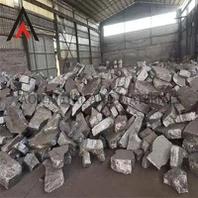
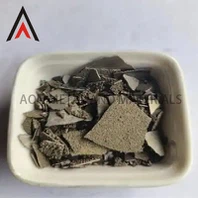
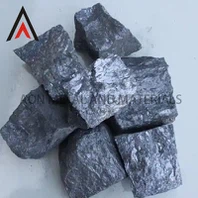
In ladle refining processes, calcium silicon alloys are one of the most important composite additives. They simultaneously perform three major tasks: deoxidation, desulfurization, and inclusion modification, making them an indispensable material for producing high-quality clean steel.
However, even with the same grade of silicon calcium alloy, significant differences in treatment effects can exist between different batches. The root cause of this difference often lies not in variations in the operating process, but in the compositional stability of the CaSi alloy itself-especially fluctuations in calcium and silicon content. Calcium is the most reactive deoxidizing element, and even small changes in its content can cause significant alterations in steel treatment effects.
The dual benefits of sica alloys come from the synergistic effect of calcium and silicon, with each having its own emphasis on function:
| Elements | Core Functions | Mechanism of Action |
| Calcium (Ca) | Strong deoxidation, desulfurization, and inclusion denaturation | It has a strong affinity for oxygen and sulfur, forming CaO and CaS, thus converting Al₂O₃ into low-melting-point calcium aluminate. |
| Silicon (Si) | Basic deoxidation and carrier element processing | It first performs preliminary deoxidation, while simultaneously lowering the vapor pressure of calcium, thereby increasing the calcium yield. |


Calcium in Calcium Silicon Alloys
1. Deoxidation Capacity: Quantitative Relationship between Calcium Content and Deoxidation Efficiency
Calcium's deoxidation capacity is far superior to that of silicon. Studies have shown that calcium's oxygen affinity is about 30% higher than that of silicon. The calcium content directly determines the alloy's deoxidation efficiency.
| Calcium content types | Scope | Deoxygenation Characteristics | Applicable Scenarios |
| High calcium type |
Ca ≥ 31% |
Strong deoxidation ability, rapidly reducing the oxygen content of molten steel and forming low-melting-point calcium aluminate inclusions. | High-purity steel, automotive steel, bearing steel |
| Medium calcium type |
Ca 24%-28% |
Moderate deoxidation ability, good overall performance. | Conventional high-quality steel, structural steel |
| Low calcium type |
Ca ≤ 20% |
Limited deoxidation ability, mainly used as an auxiliary silicon deoxidation agent. | Ordinary steel, cast iron |
2. Inclusion Modification Effect
One of the core values of silicon calcium alloys is the modification of high-melting-point Al₂O₃ inclusions into low-melting-point calcium aluminates, thereby improving the fluidity of molten steel and the properties of the steel.
| Ca/Si ratio | Inclusion Morphology | Treatment Results | Risk of nodule formation at the sprue |
| < 0.5 (insufficient calcium) | High-melting-point Al₂O₃ inclusions (melting point 2050℃) | Incomplete denaturation; inclusions remain solid. | High risk |
|
0.5-0.8 |
Partially modified | Moderate results; fluctuations observed. | Medium risk |
| ≥ 0.8 (sufficient calcium) | Liquid calcium aluminate (low melting point) | Inclusions fully denatured; easily floated and removed. | Low risk |
3. Negative Effects of Excessive Calcium Content
It's important to note that more calcium is not necessarily better. Excessive calcium content can lead to new problems:
| Problem Types | Specific manifestations | Mechanism Explanation |
| Boiling point limitation | Calcium boiling point is only 1484℃, lower than the temperature of molten steel. | Excess calcium will vaporize violently, causing molten steel to splash. |
| Decreased yield | Calcium yield in bulk alloys is only 20%-30%. | Calcium escapes as vapor, resulting in low utilization. |
| Slower dissolution | The melting point of high-calcium alloys increases (1100℃→1300℃). | Complete dissolution time is extended from 3-5 minutes to 8-10 minutes. |
| Waste of resources | Loss of high-valence calcium elements. | Economic efficiency decreases. |
Process recommendation: It is recommended to use the cored wire feeding process instead of direct input of block alloy, which can increase the calcium recovery rate from 20%-30% to 40%-50%.


Silicon in CaSi Alloys
1. Silicon's "Carrier" Function
Silicon in silicon-calcium alloys not only performs basic deoxidation but also plays a crucial role-acting as a "carrier" for calcium. Pure calcium has extremely high vapor pressure at molten steel temperatures, making it difficult to add effectively; however, after forming an alloy with silicon, the activity of calcium decreases, allowing it to dissolve stably in molten steel and exert its deoxidizing effect.
2. The Comprehensive Impact of the Ca/Si Ratio on Steel Treatment Effects
Considering calcium and silicon as a synergistic system, their ratio (Ca/Si) is a more important process parameter than the content of any single element:
| Ca/Si ratio range | Deoxygenation effect | Inclusion control | Continuous casting performance | Steel Quality |
|
< 0.4 (Severe calcium deficiency) |
Poor | Al₂O₃ inclusions: undenatured | Severe nozzle clogging | Significant anisotropy |
|
0.4-0.6 (Insufficient calcium) |
Average | partially denatured | Intermittent clogging | Large performance fluctuations |
|
0.6-0.8 (Good) |
Good | fully denatured | Basically stable | Stable performance |
|
0.8-1.0 (Optimal) |
Excellent | completely liquefied | Smooth operation | Excellent quality |
|
> 1.0 (Calcium excess) |
Excellent but wasteful | stable effect | Smooth operation but high cost | Good quality but poor economic efficiency |
For steelmaking companies, selecting a supplier of calcium silicon alloys with stable composition is not only a procurement decision but also a strategic investment in quality control. Only when the calcium and silicon content of each batch of silicon-calcium alloy remains stable within the target range can process engineers establish a reliable process model, enabling predictable, reproducible, and optimizable steel treatment results.