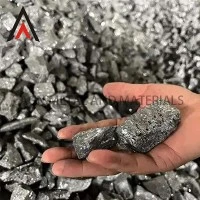
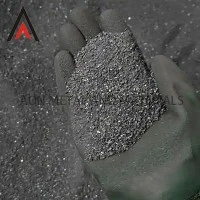
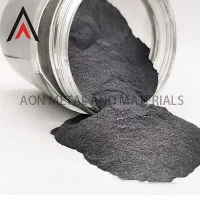
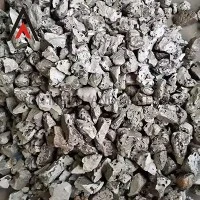
In the steelmaking and foundry industries, multi-element silicon-based alloys play a critical role in deoxidation, desulfurization, and microstructure refinement of molten steel. Among them, silicon barium (SiBa), silicon barium calcium (SiBaCa), and silicon aluminum barium calcium (SiAlBaCa) are widely used due to their cost-effectiveness and versatile performance.
These alloys are all ferro silicon based composites engineered to enhance steel quality through targeted chemical reactions. They combine silicon (a strong deoxidizer) with other elements like barium, calcium, and aluminum to amplify specific metallurgical effects.
1. Barium Silicon Alloy (SiBa)
Core Definition: A binary alloy of silicon and barium, primarily used as a deoxidizer and inoculant in steelmaking.
Key Composition: Typically contains 60–80% silicon (Si), 10–25% barium (Ba), and trace elements (Fe, C, P, S ≤ 0.5% each).
Production Process: Smelted in a submerged arc furnace using quartz sand, barium ore (or barium carbonate), and coke. The reaction occurs at 1600–1800°C, forming a silicon-barium matrix with minimal impurities.
2. Silicon Barium Calcium Alloy (SiBaCa)
Core Definition: A ternary alloy adding calcium to silicon barium, designed to boost desulfurization and inclusion modification.
Key Composition: 50–70% Si, 8–20% Ba, 5–15% Ca, with Fe as the base metal. Strict control of P (≤0.05%) and S (≤0.03%) ensures low harmful impurities.
Production Process: Similar to SiBa but incorporates calcium oxide (CaO) or calcium carbide (CaC₂) into the smelting mix. The addition of calcium requires precise temperature control (1700–1900°C) to prevent vaporization.
3. Silicon Aluminum Barium Calcium Alloy (SiAlBaCa)
Core Definition: A quaternary alloy integrating aluminum into SiBaCa, offering enhanced deoxidation and grain refinement for high-quality steel.
Key Composition: 45–65% Si, 5–15% Al, 5–15% Ba, 3–10% Ca. Aluminum content is critical here, as it strengthens deoxidation efficiency.
Production Process: Uses aluminum dross or pure aluminum ingots alongside silicon, barium, and calcium raw materials. Smelted in a high-power electric arc furnace with inert gas protection to reduce aluminum oxidation.


Performance Comparison: How Do They Differ?
The unique element combinations in these alloys result in distinct metallurgical properties, making each suitable for specific applications.
|
Performance Metric
|
Silicon Barium |
Silicon Barium Calcium |
Silicon Aluminum Barium Calcium |
|
Deoxidation Ability |
Moderate (Si + Ba synergistic effect) |
Strong (Ca enhances oxygen removal) |
Excellent (Al + Si + Ba + Ca multi-stage deoxidation) |
|
Desulfurization Efficiency |
Low to moderate |
High (Ca reacts with S to form CaS) |
Very high (Al + Ca double desulfurization) |
|
Inclusion Modification |
Basic (spherical oxide inclusions) |
Good (converts brittle inclusions to ductile) |
Superior (fine, dispersed inclusions) |
|
Grain Refinement |
Mild |
Moderate |
Strong (Al promotes fine grain structure) |
|
Residual Gas Reduction |
Limited |
Moderate (reduces H₂ and N₂) |
High (Al absorbs H₂, Ba stabilizes N₂) |
Application Scenarios: Which Alloy Fits Your Needs?
Silicon Barium (SiBa): Ideal for General Steelmaking
Primary Use: Deoxidation and inoculation in carbon steel, low-alloy steel, and cast iron production.
Examples: Used in rebar (HRB400/500) and structural steel production to reduce porosity and improve castability. A major Chinese steel mill reported a 15% reduction in scrap rates after switching to SiBa from pure ferrosilicon.
Advantage: Cost-effective for standard steel grades where high-performance deoxidation isn't critical.
Silicon Barium Calcium (SiBaCa): Best for Low-Sulfur Steel
Primary Use: Desulfurization and inclusion control in low-sulfur steel, automotive steel, and pipe steel.
Examples: Essential in API 5L X70/X80 pipeline steel production, where sulfur content must be ≤0.005%. SiBaCa reduces sulfur levels by 30–40% compared to SiBa alone.
Advantage: Prevents hot cracking in welding by modifying sulfide inclusions into non-brittle forms.
Silicon Aluminum Barium Calcium (SiAlBaCa): For High-Quality & Specialty Steel
Primary Use: Premium deoxidation and purification in high-strength low-alloy (HSLA) steel, stainless steel, and aerospace-grade alloys.
Examples: Used in automotive sheet steel (DP600/800) to improve formability and impact resistance. It reduces oxygen content in molten steel to ≤20ppm, far below the 50ppm threshold for standard steels.
Advantage: Multi-element synergy ensures clean steel with excellent mechanical properties, meeting strict industry standards (e.g., ASTM A516 for pressure vessel steel).


Core Differences: How to Choose Between Them?
| Factor |
Silicon Barium |
Silicon Barium Calcium |
Silicon Aluminum Barium Calcium |
|
Key Function |
Basic deoxidation + inoculation |
Enhanced desulfurization + inclusion modification |
Advanced deoxidation + purification + grain refinement |
|
Best For |
General carbon steel, cast iron |
Low-sulfur steel, pipeline steel |
HSLA steel, stainless steel, specialty alloys |
|
Cost |
Lowest |
Moderate |
Highest (due to aluminum content) |
|
Handling Requirements |
Simple (no special storage) |
Avoid moisture (Ca reacts with H₂O) |
Strict moisture protection (Al oxidizes easily) |
Why These Alloys Matter in Modern Steelmaking
The shift toward high-quality, low-emission steel production has increased demand for efficient multi-element alloys. SiBa, SiBaCa, and SiAlBaCa each address specific pain points:
Cost Savings: SiBa reduces reliance on expensive pure silicon, cutting alloy costs by 10–20% for standard steels.
Quality Improvement: SiBaCa ensures low-sulfur steel meets welding and toughness requirements, critical for infrastructure projects.
Performance Enhancement: SiAlBaCa enables the production of high-strength, lightweight steels for automotive and aerospace industries, where every 1% reduction in weight improves fuel efficiency by 0.6–0.8%.
Choosing the Right Alloy: A Quick Guide
Opt for SiBa if you need a budget-friendly solution for general deoxidation in carbon steel.
Choose SiBaCa for low-sulfur applications or when inclusion modification is a priority.
Select SiAlBaCa for high-end steel grades requiring superior cleanliness, strength, and ductility.
By understanding the unique properties and applications of these alloys, steelmakers and foundries can optimize their processes, reduce costs, and produce higher-quality products. For custom alloy recommendations or technical support, consult with a trusted supplier specializing in ferroalloys for your specific industry needs.