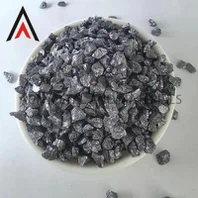
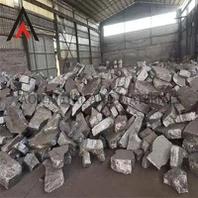
In global casting and metallurgical trade, a common misconception persists: higher-purity silicon metal = better casting performance. Many overseas buyers default to premium grades like silicon metal 421 (Si≥99.0%, Fe≤0.4%, Al≤0.2%, Ca≤0.1%) assuming tighter impurity control delivers superior results. But in real-world foundry production-especially for high-volume, general-purpose castings and certain aluminum/iron alloy processes-standard-grade silicon metal 553 (Si≥98.5%, Fe≤0.5%, Al≤0.5%, Ca≤0.3%) often delivers more stable casting quality, better process tolerance, and lower total cost.
Silicon metal grades are defined by the maximum limits of three critical impurities: Fe (Iron), Al (Aluminum), Ca (Calcium)-the three digits directly correspond to these limits (×0.1%). Below is the standard international specification comparison:
| Grade | Si (Min, %) | Fe (Max, %) | Al (Max, %) | Ca (Max, %) | Typical Purity |
|---|---|---|---|---|---|
| 553 | 98.5 | 0.5 | 0.5 | 0.3 | Standard Grade |
| 421 | 99.0 | 0.4 | 0.2 | 0.1 | High-Purity Grade |
Critical Impurity Impacts on Casting
Iron (Fe): Forms hard, brittle intermetallic phases (e.g., Al₅FeSi) in aluminum alloys-can reduce elongation but improves wear resistance and mold filling stability in thick-section castings.
Aluminum (Al): Reacts with nitrogen to form AlN inclusions, causing brittleness in steel; in aluminum alloys, it refines grains but can create oxide films if over-controlled.
Calcium (Ca): The most impactful difference-Ca poisons Sr/Na modifiers in Al-Si alloys, disrupts inoculation in ductile iron, and forms slag inclusions. Si553 has 3× higher Ca than Si421 (0.3% vs 0.1%).

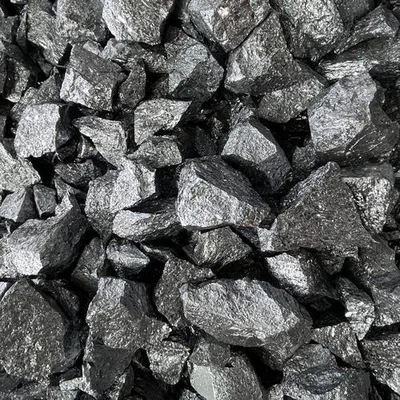
Why 553 Outperforms 421 in Specific Casting Scenarios
2.1 High-Volume General Aluminum Castings
Silicon 421's weakness:
Ultra-low Al (0.2%) and Ca (0.1%) make melt reactivity overly sensitive. Small temperature fluctuations or minor melt contamination cause inconsistent grain refinement, shrinkage porosity, and poor mold filling-leading to higher scrap rates in mass production.
Silicon 553's advantage:
Slightly higher Al (0.5%) acts as a natural grain refiner, stabilizing solidification and reducing hot cracking in thin-wall, complex castings.
Moderate Ca (0.3%) does not fully poison modifiers in standard Al-Si alloys-with proper Sr addition (10–15% more than 421), modification effect remains stable, and the cost savings on 553 far outweigh the extra modifier cost.
Better melt fluidity and mold filling: The balanced impurity profile reduces surface tension, improving cavity filling for intricate parts and reducing misruns.
2.2 Gray Iron & Ductile Iron Casting
Silicon 421's weakness:
Extremely low Ca (0.1%) provides insufficient nucleation sites during inoculation. This leads to under-inoculation, uneven graphite flake/sphere formation, and inconsistent mechanical properties (hardness, tensile strength) across batches-especially in thick-section iron castings.
Silicon 553's advantage:
Higher Ca (0.3%) acts as a supplementary inoculant, promoting uniform graphite precipitation and reducing chill tendency (white iron formation) in thick sections.
Balanced Fe/Al impurities do not harm graphite morphology in standard iron grades-they stabilize the inoculation effect and extend the inoculation fade time, critical for large casting lines with long pouring cycles.
No need for extra inoculants: Silicon metal grade 553's natural impurity profile reduces the required addition of specialized inoculants, simplifying the process and cutting costs.
2.3 Cost-Sensitive, Non-Critical Structural Castings
For castings where surface finish and ultra-high mechanical properties are not critical (e.g., construction brackets, non-safety automotive components), Silicon metal grade 421's premium purity is wasted:
421 silicon metal costs 8–15% more than 553 (due to stricter smelting and purification processes).
553 silicon metal meets all performance requirements for these applications-no measurable difference in final casting quality, but significant margin improvement.


When to Choose 421 Instead of 553
421 Grade Silicon metal remains the right choice only for high-end, precision-critical casting applications where impurity-induced defects are unacceptable:
High-Strength Aluminum Alloys (A356, A357 for aerospace/automotive safety parts): Ultra-low Al/Ca prevents brittle AlN inclusions and ensures full Sr modification-critical for high elongation and fatigue resistance.
Ultra-Thin-Wall Die Castings (≤2mm, electronics housings): Minimal impurities prevent oxide inclusions and ensure flawless surface finish for anodizing/painting.
High-Purity Special Steel & Superalloy Castings: Strict control of Fe/Al/Ca is required to meet aerospace/medical material standards.
Practical Selection Guide
| Application Type | Preferred Grade | Key Reason | Cost Impact |
|---|---|---|---|
| High-volume general Al castings (ADC12, A380) | 553 | Stable process, lower scrap, better fluidity | 10–15% lower total cost |
| Gray/ductile iron thick-section castings | 553 | Better inoculation, reduced chill, stable graphite | 8–12% lower production cost |
| Non-critical structural castings | 553 | Meets specs, maximum cost efficiency | 5–10% raw material savings |
| Aerospace/auto safety Al alloy castings | 421 | Ultra-low impurities, flawless modification | Necessary premium for quality |
| Ultra-thin-wall precision die castings | 421 | Zero inclusion risk, perfect surface finish | Required for high-end surface requirements |