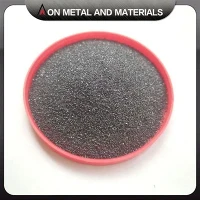
Hey there! As a supplier of FeSi Nodulierer, I've had my fair share of experiences in the industry. One of the most crucial aspects that we, as suppliers, and our customers need to focus on is testing the quality of FeSi Nodulierer. In this blog, I'll share some insights on how to do just that.
Understanding FeSi Nodulierer
Before we dive into the testing methods, let's quickly understand what FeSi Nodulierer is. FeSi Nodulierer is an alloy commonly used in the foundry industry, especially in the production of ductile iron. It helps in the nodularization of graphite in the iron, which improves the mechanical properties of the final product, such as toughness and ductility.
Physical Inspection
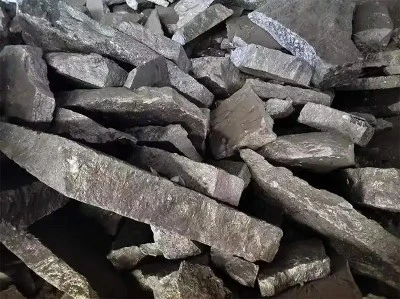
The first step in testing the quality of FeSi Nodulierer is a physical inspection. Look at the appearance of the alloy. It should have a uniform color and texture. Any signs of unevenness, cracks, or foreign particles could indicate a problem. For instance, if you see rust or other contaminants on the surface, it might affect the performance of the nodulierer in the casting process.
Also, check the size and shape of the FeSi Nodulierer pieces. They should be consistent in size, as this can affect how they dissolve and react in the molten metal. If the pieces are too large or too small, it could lead to inconsistent nodularization.
Chemical Analysis
Chemical analysis is a vital part of testing the quality of FeSi Nodulierer. It helps us determine the exact composition of the alloy, which is crucial for its performance. There are several methods for chemical analysis, but two of the most common ones are spectroscopy and wet chemical analysis.
Spectroscopy is a fast and accurate method. It uses light to analyze the elements present in the alloy. By measuring the wavelengths of the light emitted or absorbed by the sample, we can identify and quantify the different elements. This method can detect even trace amounts of elements, which is important because even small variations in the composition can have a significant impact on the nodularization process.
Wet chemical analysis, on the other hand, involves dissolving the sample in a chemical solution and then using various chemical reactions to determine the concentration of different elements. This method is more time - consuming than spectroscopy but can provide very accurate results, especially for some elements that might be difficult to detect with spectroscopy.
Nodule Count and Shape Analysis
Another important aspect of testing FeSi Nodulierer quality is to analyze the nodule count and shape in the cast iron. After casting with the FeSi Nodulierer, take a sample of the cast iron and prepare it for microscopy.
Using a metallurgical microscope, count the number of graphite nodules per unit area. A higher nodule count generally indicates better nodularization, which means the FeSi Nodulierer is working effectively. Also, pay attention to the shape of the nodules. They should be nearly spherical or rounded. Elongated or irregular - shaped nodules might suggest that the nodularization process was not successful, which could be due to poor - quality FeSi Nodulierer.
Mechanical Properties Testing
The quality of FeSi Nodulierer also has a direct impact on the mechanical properties of the cast iron. Therefore, testing the mechanical properties of the cast product can give us an idea of the nodulierer's quality.
Tensile strength, yield strength, and elongation are some of the key mechanical properties to test. Tensile strength measures the maximum stress the material can withstand before breaking, while yield strength is the stress at which the material begins to deform plastically. Elongation indicates the material's ability to stretch before breaking.
If the cast iron has good mechanical properties, it's a sign that the FeSi Nodulierer has effectively nodularized the graphite, resulting in a stronger and more ductile material.
Comparison with Standards
It's always a good idea to compare the test results of your FeSi Nodulierer with industry standards. There are international and national standards that define the acceptable range of composition, nodule count, mechanical properties, etc. for FeSi Nodulierer and the cast iron produced with it.
By comparing your results with these standards, you can quickly identify if your FeSi Nodulierer meets the requirements. If the results are outside the acceptable range, you need to investigate further to find out the cause, which could be a problem with the production process or the raw materials.
Other Related Products
In addition to FeSi Nodulierer, there are other related products that might be of interest to you. You can check out Ferro Boron Powder, which has various applications in the metallurgical industry. Manganese Carbonate is also an important material used in different manufacturing processes. Ferro Boron is another alloy with unique properties. For those looking for related slag products, FerroSilicon Silicon Slag could be a good option. And if you need manganese - based briquettes, Manganese Metal Briquettes 97% might be what you're looking for.
Conclusion
Testing the quality of FeSi Nodulierer is a multi - step process that involves physical inspection, chemical analysis, nodule count and shape analysis, mechanical properties testing, and comparison with standards. By following these steps, we can ensure that the FeSi Nodulierer we supply meets the highest quality standards and provides the best results for our customers in the foundry industry.

If you're interested in purchasing high - quality FeSi Nodulierer or any of the other related products, feel free to reach out for a procurement discussion. We're always happy to talk about how our products can meet your specific needs.
References
- Smith, J. (2018). "The Role of Nodulizers in Ductile Iron Production." Foundry Journal.
- Johnson, A. (2019). "Chemical Analysis Techniques for Metallurgical Alloys." Metallurgy Review.
- Brown, C. (2020). "Mechanical Properties Testing of Cast Iron." Casting Technology Magazine.