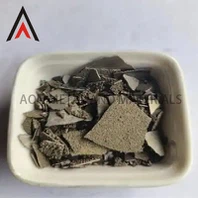
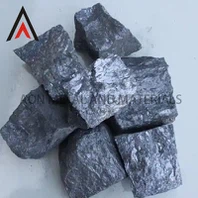
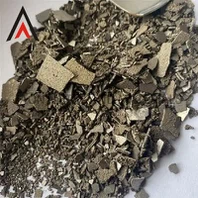
In the procurement of 441 silicon metal, purchasing personnel often focus solely on chemical specifications (Fe≤0.4%, Al≤0.4%, Ca≤0.1%), neglecting an equally important parameter: size distribution. For metallurgical engineers, the size of a bag of silicon metal is not only a matter of convenience for transportation and feeding, but also a direct reflection of the stability of upstream smelting processes. Over-crushed powder means increased melting loss, while oversized lumps may cause melting delays in the induction furnace.
Silicon metal 441 belongs to metallurgical grade silicon, and its core production process is the carbothermal reduction method. The entire process is completed in a large submerged arc furnace. The Si441 grade requires a calcium content of ≤0.1%, far lower than the 0.3% of silicon metal 553. This means that more stringent furnace charge purification or additional refining treatments are necessary during the smelting process. Many high-quality silicon441 undergo a bottom-blowing refining process during production. This involves blowing a mixture of oxygen and air into the molten silicon through permeable bricks, using bubble agitation to accelerate the reaction and remove impurities such as aluminum and calcium. This process directly impacts the crystal morphology and density of the resulting silicon ingot.


How the Smelting Process Affects Size Distribution
Casting and Cooling
After liquid silicon exits the furnace, it is cast into silicon ingots. The cooling rate is crucial in determining the initial grain size of the ingot:
Slow Cooling:
Typically, die casting is used. The silicon ingot cools slowly in a mold, forming a coarse columnar crystal structure. This structure has low internal stress, but during subsequent crushing, cracks easily propagate along grain boundaries, producing relatively regular large pieces with less powder.
Rapid Cooling:
Some continuous production processes or thin ingot cooling can lead to the formation of a fine-grained structure. Fine-grained silicon is harder and more brittle, making it more prone to producing irregular fragments and fine powder during mechanical crushing.
Mechanical Crushing
Silicon ingots must be crushed and screened to achieve the size required by the customer, such as 10-50mm or 10-100mm.
Process-related:
The original crystal structure, determined by the smelting process, directly determines the ease of crushing and the powder yield.
If the smelting temperature is unevenly controlled or refining is over-controlled, micro-cracks or impurity segregation may exist inside the silicon ingot. During jaw crushing, this makes it easier to over-crush, producing a large number of small pieces and powder smaller than 10mm.
High-quality, well-crystallized 441 silicon ingots produce more target size pieces (e.g., 20-80mm) during crushing, with a concentrated particle size distribution.
Size Distribution
A stable 441 silicon metal supplier should have a normal and concentrated particle size distribution. If an extreme situation occurs in a batch:
Too many oversized pieces (>100mm):
This may indicate excessively long cooling time after furnace exit or inadequate quality control in the crushing and screening process.
Excessive Powder (<5mm): This may indicate:
Poor crystallinity and loose texture of the silicon ingot itself (raw material or smelting issues).
Overly harsh crushing process, generating excessive waste, with the supplier mixing in powder to increase weight.


The Actual Impact of Size on Aluminum Alloy Melting
Burn-off and Yield
In aluminum alloy melting (e.g., in a medium-frequency furnace), the specific surface area of silicon metal determines oxidation loss.
Fine Powder (<3mm):
Large specific surface area, easily oxidized instantly upon addition to molten aluminum, forming slag and reducing silicon yield. Industry estimates suggest that for every 5% increase in fine powder content, silicon burn-off rate may rise by 1-2%.
Target Particle Size (10-50mm):
The optimal balance between dissolution rate and minimum oxidation loss. Particles can quickly sink into the molten aluminum to melt, reducing contact with air.
Melting Efficiency
Excessively large size (>100mm):
In traditional medium-frequency furnaces, this prolongs melting time, increases power consumption, and may even cause blockage at the furnace opening, affecting feeding efficiency.
Precision of Composition Control
For precision alloy production, ideally, the amount of silicon added can be accurately calculated for each piece of silicon added. If the size distribution is extremely uneven (ranging from powder to large lumps), the amount of silicon added each time will fluctuate greatly, affecting the consistency of the alloy composition.


441 Silicon Metal Size Quick Acceptance Guide
For 441 silicon metal, purity is the identifier, while size is the language of the process. A responsible supplier can not only provide a qualified spectral analysis report but also demonstrate their process control capabilities throughout the entire process, from submerged arc furnace smelting to crushing and screening, through a stable and concentrated size distribution.
| Inspection Items | Acceptable Standards | Risks of non-compliance |
| Main Block Size (10-50mm) |
≥90% |
Unbalanced melting efficiency and burn-off loss |
| Extra Large Blocks (>60mm) |
≤3% |
Clogged feed inlet, slow melting |
| Fine Powder (<5mm) |
≤2% |
Increased burn-off, more slag |
| Cross Surface Color | Bright silver-gray, dense | Dark ash with porous structure raises questions about purity or strength |
| Surface Cleanliness | No visible carbon powder/soil | Potential contamination from slag or packaging |